
Puzzle Play · 2 Nov 2026 · Kids Essentials
Premium 3D Rubik’s Cube Ball Maze Puzzle: A Parent’s Play Guide
Learn what to check before buying a 3D ball maze puzzle and how to make play safe, manageable and enjoyable for your child.
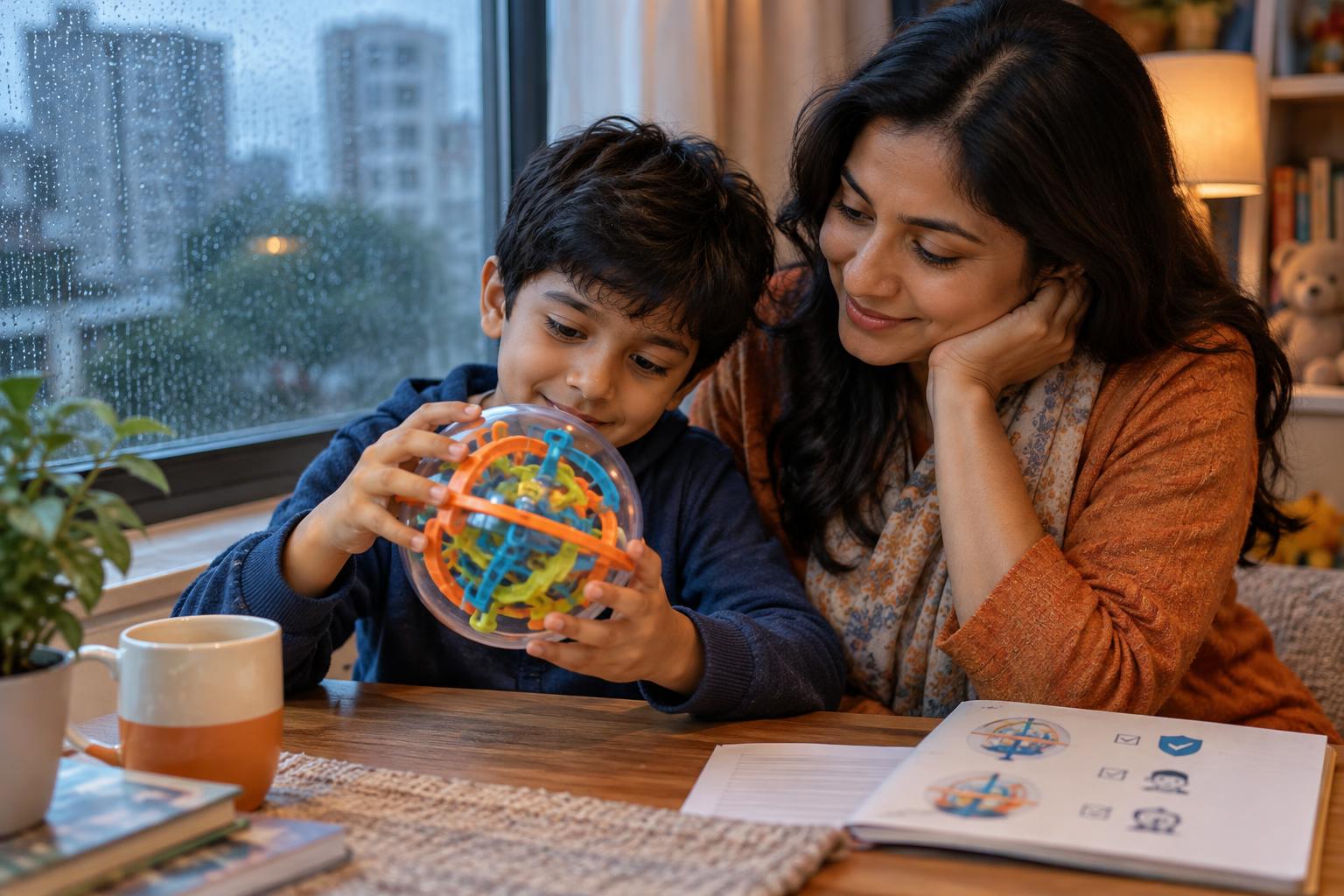
A puzzle that invites children to pause, look and try again can be a welcome addition to family playtime. If you are considering a Premium 3D Rubik’s Cube Ball Maze Puzzle, start with your child’s interests rather than the word “premium”. Do they enjoy following pathways, exploring how things move or returning to a challenge?
This guide explains what to check before buying and how to introduce ball-maze play at home. The exact model’s age guidance, construction and instructions should always come first.
What kind of puzzle are you choosing?
Ball-maze puzzles generally involve guiding a small ball along a route by carefully changing the puzzle’s position. A three-dimensional maze may require players to look at the pathway from different angles rather than follow a flat surface.
However, the product name alone does not confirm how this particular puzzle works. Do not assume it twists like a traditional colour-matching Rubik’s Cube, has numbered checkpoints or uses any particular material. Ask to see the instructions or a demonstration before purchasing.
Also, “premium” is not a safety certification. Useful buying information includes the manufacturer’s recommended age, dimensions, warnings and whether any components can become accessible.
Is it suitable for your child?
For families with children aged one to ten, suitability varies considerably. Follow the labelled minimum age even if a younger child seems interested or unusually skilled.
- Babies and toddlers: Do not offer a puzzle with small balls or accessible small parts. Supervision does not make an age-inappropriate toy safe.
- Preschool children: If the model is labelled for their age, consider whether they can hold it comfortably and follow a short instruction without becoming overwhelmed.
- School-age children: Look at their interest in trial-and-error play. Some enjoy repeating one tricky section; others prefer a puzzle with more visible progress.
Age-based browsing can help narrow your choices, but individual product warnings remain essential. You can explore options for children aged 5–7 years and compare the demands of different activities.
A calm first play session
Look before moving
Choose a clear table or a comfortable seated position away from the edge of stairs or balconies. Read the instructions together, identify the starting point and trace a short section of the route with your eyes. Keep younger siblings away from the play area.
Demonstrate one small movement
If the instructions call for tilting, demonstrate a gentle tilt rather than rapid shaking. Describe what you notice: “When I move this side down, the ball goes that way.” Then hand over the puzzle. A brief demonstration leaves room for your child to discover the next step.
Choose a tiny goal
The first goal does not need to be finishing the maze. Try reaching one bend or learning how to stop before a difficult section. Begin with a short session and finish while your child still feels comfortable, rather than insisting on one more attempt.
Make the challenge useful without turning it into a lesson
Ball-maze play can offer opportunities to practise watching a moving object, adjusting hand movements and deciding what to try next. These are opportunities for practice, not promises of better concentration, intelligence or school results.
Use occasional questions instead of constant instructions:
- “Which way do you think the ball will move?”
- “What happened when you tilted it quickly?”
- “Would you like to repeat that movement more slowly?”
- “Shall we look from another side?”
Talk in Bangla, English or whichever language feels natural at home. The shared observation matters more than special vocabulary. For other activities that invite children to test ideas, browse problem-solving toys and puzzles.
When frustration appears
If the ball slips back, acknowledge the disappointment: “You worked hard to reach that corner.” Then offer a choice between another attempt, a brief demonstration or a break. Avoid taking over without asking.
With siblings, use turns based on attempts rather than a race to finish. Each child can choose a personal goal. If this type of challenge is not enjoyable, a picture puzzle from the wooden puzzles collection may offer a different play experience; check its age suitability too.
Check, store and choose thoughtfully
Before each session, inspect the puzzle for cracks, loose sections or damage. Stop using it if its enclosure is compromised or a ball becomes accessible. Do not open or modify it to retrieve a stuck component; follow the manufacturer’s guidance.
Store it beyond younger children’s reach and follow its cleaning instructions. Ultimately, the right choice is a puzzle your child can use safely and enjoys exploring—not necessarily one they can complete quickly. A calm adult nearby and permission to pause can make the experience more welcoming.