
Family Time · 28 Sept 2026 · Kids Essentials
Family Time: Simple Ways to Connect Through Everyday Play
Make family time easier with simple play ideas, flexible routines and shared moments for children aged 1–10.
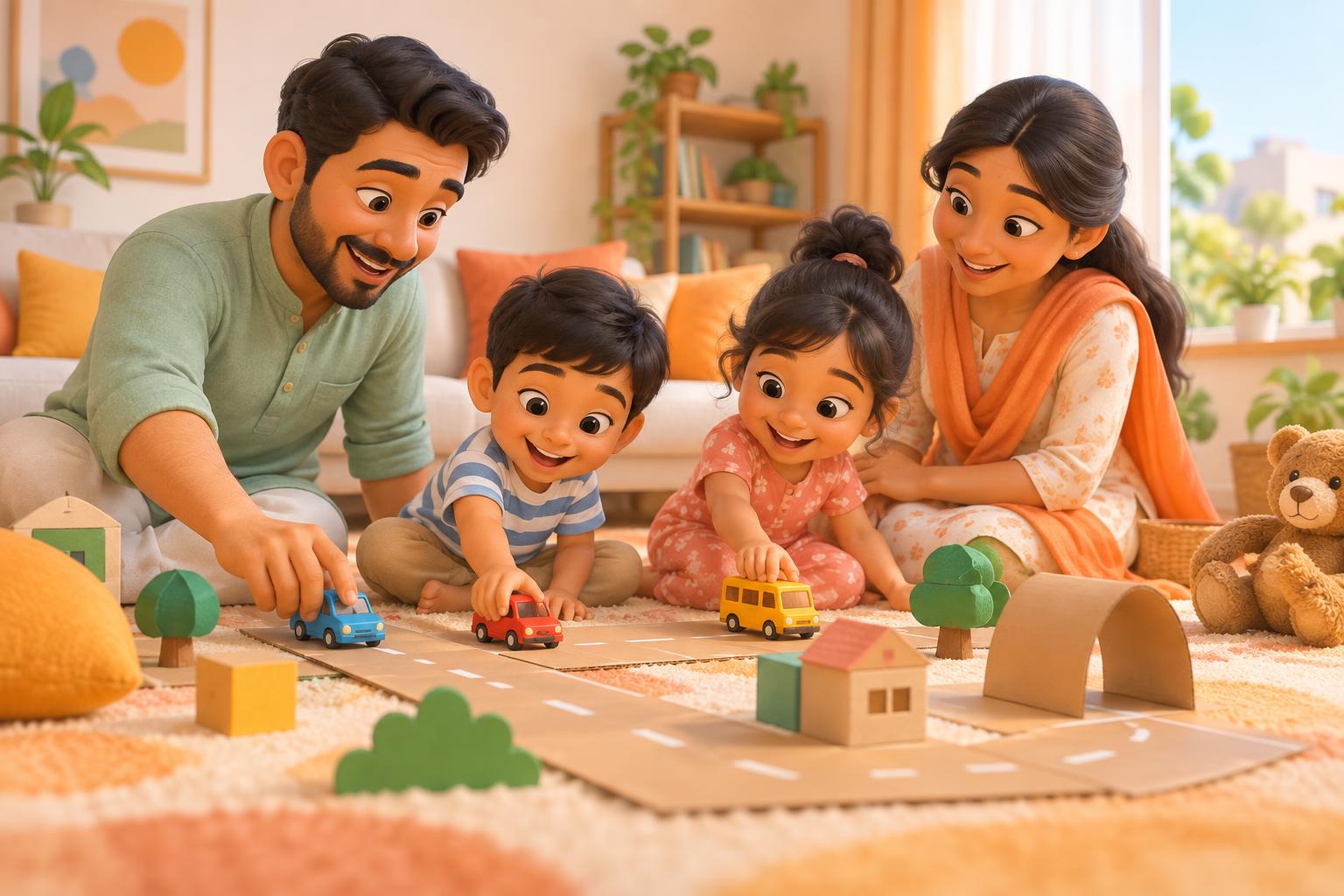
Family Time Does Not Need a Big Plan
Between work, school, traffic and household tasks, finding time together can feel difficult. For many families in Bangladesh, a full afternoon of activities is not realistic. The good news is that family time can fit into ordinary life: a song while folding clothes, a shared drawing after dinner or a few puzzle pieces before bedtime.
The aim is connection, not a perfect activity. You do not need to buy something new, finish a project or turn every game into a lesson. Start with a small moment when you can give your child your attention.
Choose a Routine You Can Actually Keep
Instead of promising a long play session every day, attach family time to something that already happens. You might share a story after the evening meal or play a guessing game before the bedtime routine. Choose a time when your child is usually comfortable, rather than hungry or exhausted.
- Offer two choices: “Shall we draw together or play a matching game?”
- Make space: A clear corner of the floor or table is enough.
- Put distractions aside: If possible, silence your phone for the activity.
- Keep the ending gentle: Give a short warning before packing away.
If a day goes badly, simply try again tomorrow. A routine should support your family, not become another source of guilt.
Adapt the Same Activity for Different Ages
Siblings do not always need separate activities. A shared theme can work, with different roles for each child. Follow your child's interests and current abilities rather than expecting every child of the same age to participate in the same way.
Ages 1–3: Copy, Name and Explore
Sing an action song, roll a large soft ball back and forth or name familiar objects in a picture book. Let your child repeat a favourite action as often as they like. Keep activities brief and stay close. Avoid small puzzle pieces and other choking hazards, especially for children under three or those who still mouth objects.
Ages 4–6: Pretend and Take Turns
Make a pretend market with empty boxes, draw a family meal or take turns adding animals to an imaginary zoo. Adults can join as customers or visitors rather than directing everything. If your child enjoys assembling pictures, browse wooden puzzles together, checking each item's age guidance and piece size before choosing.
Ages 7–10: Share Decisions and Challenges
Invite older children to plan a family quiz, design a paper board game or choose a puzzle to tackle together. Let them explain their ideas without immediately correcting them. For children who enjoy more detailed picture challenges, explore paper puzzles and choose according to their experience, interest and the product's guidance.
Try Three Easy Activities This Week
1. Create a Family Picture
Place a large sheet of paper on the table and choose a theme, such as “our neighbourhood” or “a rainy day.” Each person adds something. Younger children can make marks while older children draw shops, rickshaws or people. Ask, “Tell me about your part,” instead of judging whose drawing looks best.
2. Make Puzzle Time a Team Effort
Choose a puzzle that feels manageable for the people joining in. One person can look for edges, another can gather similar colours, and another can check the picture. Swap jobs if someone wants a change. Keep small pieces away from younger siblings, and store unfinished work somewhere they cannot reach.
3. Play a Household Detective Game
Ask everyone to spot something round, soft or blue without moving from their seats. Then let your child choose the clue. This needs no special equipment and works well when rain keeps you indoors. For younger children, point to two safe objects and ask them to find the matching colour.
Help Everyone Feel Included
When grandparents or other relatives join, invite them to share a childhood rhyme, game or memory in Bangla or whichever language feels natural. A parent who is away can join occasionally through a short call, perhaps listening while a child describes a drawing.
With siblings, avoid making the oldest child the permanent helper. Give everyone a turn to choose or lead. If arguments begin, pause and name the problem calmly: “You both want the same piece.” Offer a turn-taking plan, separate roles or a break rather than forcing the activity to continue.
Finish with a Small Moment of Connection
Before tidying up, ask, “What did you enjoy?” Share your own answer too: “I liked hearing your funny idea.” Leave room for unfinished puzzles and imperfect drawings. Family time matters because you are spending it together, not because you have something impressive to show at the end.