Animal Habitats · 22 Oct 2026 · Kids Essentials
Exploring Animal Habitats with Picture Puzzles: Land, Water and Sky
Turn animal picture puzzles into playful conversations about habitats, with simple activities for children aged 1–10.
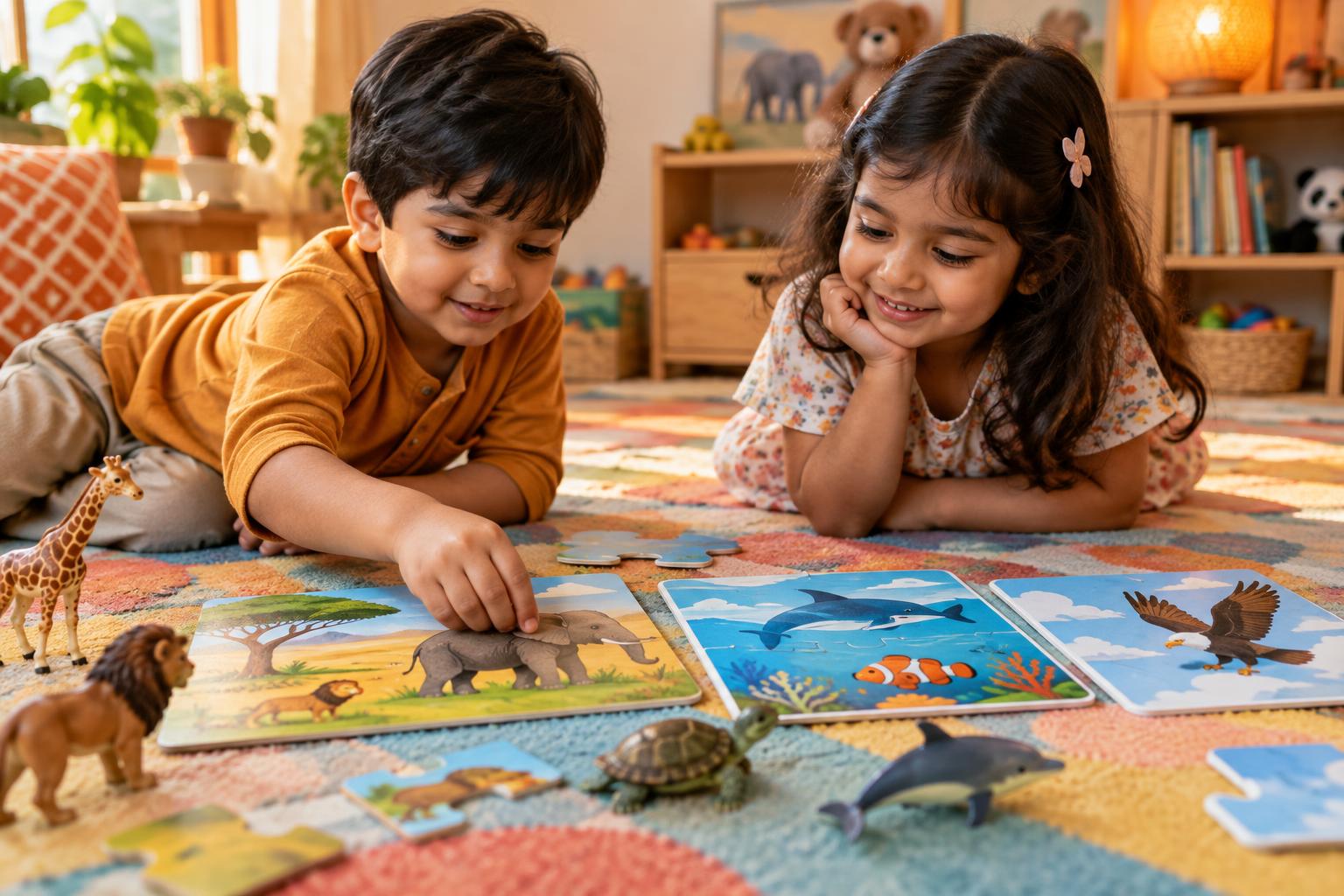
A fish, an owl or a rabbit on a puzzle can open a lovely conversation: “Where would this animal find food and a safe place to rest?” For children in Bangladesh, connections might begin with a pond nearby, birds outside a window or animals seen in a book. You do not need a science lesson plan—just a picture, a few questions and time to explore together.
Start with what a habitat means
Explain that a habitat is the place where an animal lives and finds what it needs, including food, water and shelter. Land, water and sky are useful starting categories, but they are not three separate boxes that every animal fits into neatly.
In particular, the sky is a space many animals travel or feed in, rather than a complete habitat. Birds also need places such as trees, wetlands or grasslands to rest and breed. A duck may swim in water, walk on land and fly through the air. Discovering these overlaps is part of the fun.
Choose a picture, not just a piece count
Look for animals your child can recognise and a puzzle they can attempt without becoming overwhelmed. Check the stated age guidance, warnings and piece size before choosing. Wooden pieces are not automatically suitable for toddlers, and small pieces must stay away from children who might mouth them.
For ideas, browse Kids Essentials’ wooden puzzles. The Fish Wooden Puzzle and Owl Wooden Puzzle offer animal themes to build a conversation around. Check each product’s details rather than assuming its suitability from the name.
Make a simple habitat sorting game
Draw three areas on paper: land with some plants, water with a shoreline, and sky above. Keep the drawing simple. Complete the puzzle first, or use its reference picture while your child works. Then draw little animal pictures together and place them on your homemade scene.
- Notice: “What do you see—legs, wings, fins or fur?”
- Suggest: “Where might this animal find food?”
- Explain: “What makes you think it belongs there?”
- Reconsider: “Could it use another part of our picture too?”
Avoid making every answer a test. If your child puts a bird in the water, ask which bird they are imagining. They may be thinking of a duck rather than making a mistake.
Explore land, water and sky
Land: look beyond “on the ground”
Ask where a land animal could hide, rest and find food. Forests, grasslands and deserts provide very different living conditions. For a Bangladesh connection, talk about the Sundarbans as a mangrove habitat with trees, muddy ground and tidal waterways—not simply a dry forest.
Try asking, “Would every land animal be comfortable in the same place?” If a puzzle shows zoo animals, explain that a zoo is a place where people care for animals, not their natural habitat.
Water: ponds and seas are different
Begin with familiar ponds and rivers, then compare them with the sea. Explain that some animals live in freshwater and others in saltwater; not every fish can live in either. An Underwater World puzzle can provide a starting theme, while a reliable animal book can help you check unfamiliar creatures.
Ask, “What would happen if this water became full of rubbish?” Keep the discussion practical: putting waste in a bin is one small way families can help protect waterways.
Sky: wings do not tell the whole story
With an owl or another bird picture, ask, “Where does it go when it stops flying?” Discuss trees or other resting places appropriate to that bird. Remind older children that bats are mammals that fly, while some birds cannot fly. Movement alone does not tell us an animal’s whole story.
Adjust the activity to your child
- Ages 1–2: Point to animals in a picture together. Say a name and make a sound. Use only age-appropriate materials with close supervision.
- Ages 3–5: Sort two or three familiar animals. Accept answers in Bangla or English and gently add new words.
- Ages 5–7: Ask children to draw food and shelter beside each animal, including animals that use both land and water.
- Ages 7–10: Compare specific habitats and check one puzzle detail against a reliable reference. Illustrations may be decorative rather than scientifically accurate.
Finish with a real-world connection
Watch a bird from a safe window or notice insects around plants without disturbing them. Stay away from water edges and do not handle unfamiliar wildlife. Ask, “What does this place provide for that animal?”
End while your child is still interested. One thoughtful observation matters more than sorting every animal correctly. The goal is to help children see animals as living things with needs—and to enjoy discovering their world together.